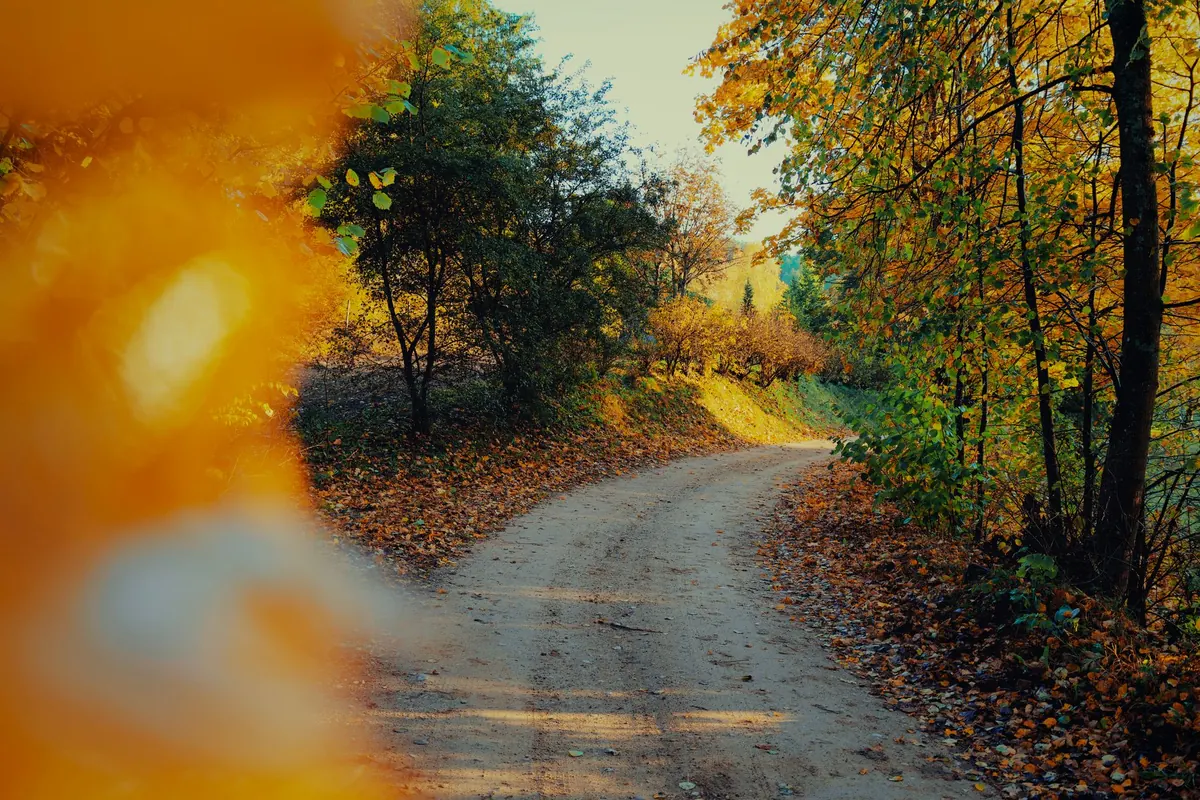
Autumn is Suffolk's quiet triumph. The hedges fill with sloes and hips, stubble turns pale gold, and the light drops low across the marshes until every reed bed looks like it has been lit from behind. It is also the season when a walk and a pub lunch stop being two separate pleasures and merge into one plan. Here is how to pair them without spending the afternoon driving between them.
Decide the walk by the sunset, not by the map
The days shrink quickly from October onwards, and by late November it is dark before five. Most of rural Suffolk has no street lighting at all, and a footpath across a ploughed field looks very different at dusk than it did at eleven in the morning.
So work backwards from the light. Give the longer route to the morning, aim to be sitting down for lunch by half twelve or one, and keep anything after that to a short, known loop — a mile or two on a track you have already walked. If you are set on a second leg, plan it to finish in the last of the daylight rather than in the dark.
Two patterns work well:
- Long walk, long lunch. Two to three hours on the coast or heath in the morning, a proper sit-down meal, then home before the light goes.
- Walk, eat, walk. Forty minutes out to the pub, an unhurried lunch, then a different, shorter route back to the car.
Either way, put a small torch or headtorch in your bag. It costs nothing to carry and it turns a slow, dark mile back to the car from a nuisance into nothing at all.
Walks that earn their lunch
Coast and marsh
Walberswick to Dunwich is the pick of the coastal routes. Go out along the beach or through the pines and heather, come back through the marshes where the reeds have gone bronze and the sky does most of the work. It is roughly five miles, almost entirely flat, and there is a pub at either end.
Further south, Aldeburgh to Thorpeness along the shingle takes about an hour each way and passes the House in the Clouds on the way. At Orford, the National Trust runs a ferry across to Orford Ness — it is seasonal, so check before you build a day around it — but the walk along the river wall towards Chillesford or Butley stands up perfectly well without the crossing. Near Snape, the Sailor's Path towards Aldeburgh makes a good late-afternoon leg if you start at the Maltings and finish near the sea.
Woods, heath and deer
Rendlesham Forest and the surrounding Sandlings heath are at their best in October, when bracken browns off and the woods open up. Ickworth Park has a herd of fallow deer that becomes far more visible in the rut, and the parkland walks there are wide, gentle and easy to shorten if the weather turns. West Stow, with its reconstructed Anglo-Saxon village, and Knettishall Heath on the county's north-west edge both offer good short loops with thatch and pub roofs within reach.
Two pieces of etiquette worth remembering in autumn: keep dogs close and under control around deer, and keep your own distance too. The rut is a demanding few weeks for them, and a phone camera is not worth a confrontation with a stag.
River valleys and gentle farmland
The Stour Valley around Dedham and Flatford gives you the Constable views without the summer crowds, and the water meadows flood attractively after heavy rain — check the footpath conditions before committing to a low-lying route. Kersey in the Brett valley, the Waveney around Bungay, and the Gipping between Needham Market and Ipswich all offer shorter, flatter walking that suits a slow, talkative group.
Choosing a pub that suits a muddy walk
Suffolk has plenty of pubs that expect wet dogs, wet coats and a certain amount of field mud. The trick is knowing which ones before you set off, rather than squinting at a menu in a doorway with wet trousers.
- Distance from the path. Half a mile is a pleasure; a mile and a half along a busy road is not.
- Food times. Many rural kitchens close between roughly two and six, and autumn hours shorten further. Ring ahead if you are relying on it.
- Space for boots. A porch, a flagged floor or a designated corner tells you everything about how the place feels about walkers.
- Dogs. Some pubs welcome them in the bar but not the dining room. Ask when you book.
- Sunday lunch. Book it. In October and November the good rooms fill with people who had exactly your idea.
To get the shape of it: the Butt and Oyster at Pin Mill and the Maybush at Waldringfield sit almost on the water and suit river-wall walks on the Orwell and the Deben. The Bell and the Anchor at Walberswick, the Ship at Dunwich and the Plough at Wangford all fall naturally at the end of coastal legs. Near Minsmere, the Eel's Foot at Eastbridge and the Westleton Crown are within reach of the reserve paths. Inland, Lavenham's Angel and Swan serve the south Suffolk lanes, and the Ramsholt Arms at Ramsholt is a long-standing stop for Deben-side walkers.
A ready-made autumn day on the coast
- Park at Dunwich and start walking north by nine thirty, while the light is still thin over the reeds.
- Follow the beach or the cliff path to Walberswick, roughly an hour and a half at an easy pace.
- Detour through the village and along the harbour wall, where the boats and the marsh birds are the whole point.
- Lunch in Walberswick or walk back and eat in Dunwich — either way, be seated by one.
- After eating, take the short loop round Dunwich Forest or along the heath edge, forty-five minutes at most.
- Finish with tea or a pint somewhere warm, and drive home in the dark with the heating on.
Three more combinations worth trying
- Orford and the river wall. A morning along the Alde, lunch in the village, then a slow wander past the castle.
- Snape and the Sailor's Path. Park at the Maltings, walk towards Aldeburgh, and turn back when the light starts to go yellow.
- Kersey and the Brett valley. A short, hilly-in-places loop through some of the prettiest lanes in south Suffolk, finishing in a village that looks painted.
Before you go
Layer properly. Autumn mornings on the coast can be genuinely cold, and the difference between a good walk and a miserable one is usually a windproof outer layer and dry feet. Waterproof boots, or at least shoes you do not mind ruining, are the sensible default from October until the ground stops holding water in spring.
Carry water and something to eat even on a short route, and tell someone where you are going if you are walking alone on the heaths. Mobile signal is patchy in the Sandlings and along parts of the Stour. Footpaths through stubble and beet fields can be churned up after harvest, so allow more time than the map suggests.
Finally, treat the shorter hours as an instruction rather than an inconvenience. Autumn in Suffolk rewards the person who starts early, eats slowly and gets home before the dark does the work for them.
Photo: Peter Dublański / Pexels