Suffolk towns have been holding markets for centuries, and the format has barely changed. Producers turn up, lay out what they have, and sell it to people who live nearby. What has changed is the quality and the range. A decent farmers' market here puts you within arm's reach of the person who grew the asparagus, cured the bacon or baked the loaf — and that changes how you shop.
What You'll Actually Find
The setting varies more than you might expect. Some markets take over a town square, with stalls under white gazebos and a queue for coffee snaking past the war memorial. Others are held in a church hall, a village hall or the corner of a car park, and feel more like a well-organised bring-and-buy. Most run monthly; a few are weekly or fortnightly; nearly all are morning affairs that wind down by early afternoon.
Many operate a producers-only rule. In practice that means the person behind the table had a hand in making what's on it, and the ingredients come from a set distance away. That rule is what separates a farmers' market from a general street market, and it's worth checking how strictly each one applies it.
A typical market will have some combination of:
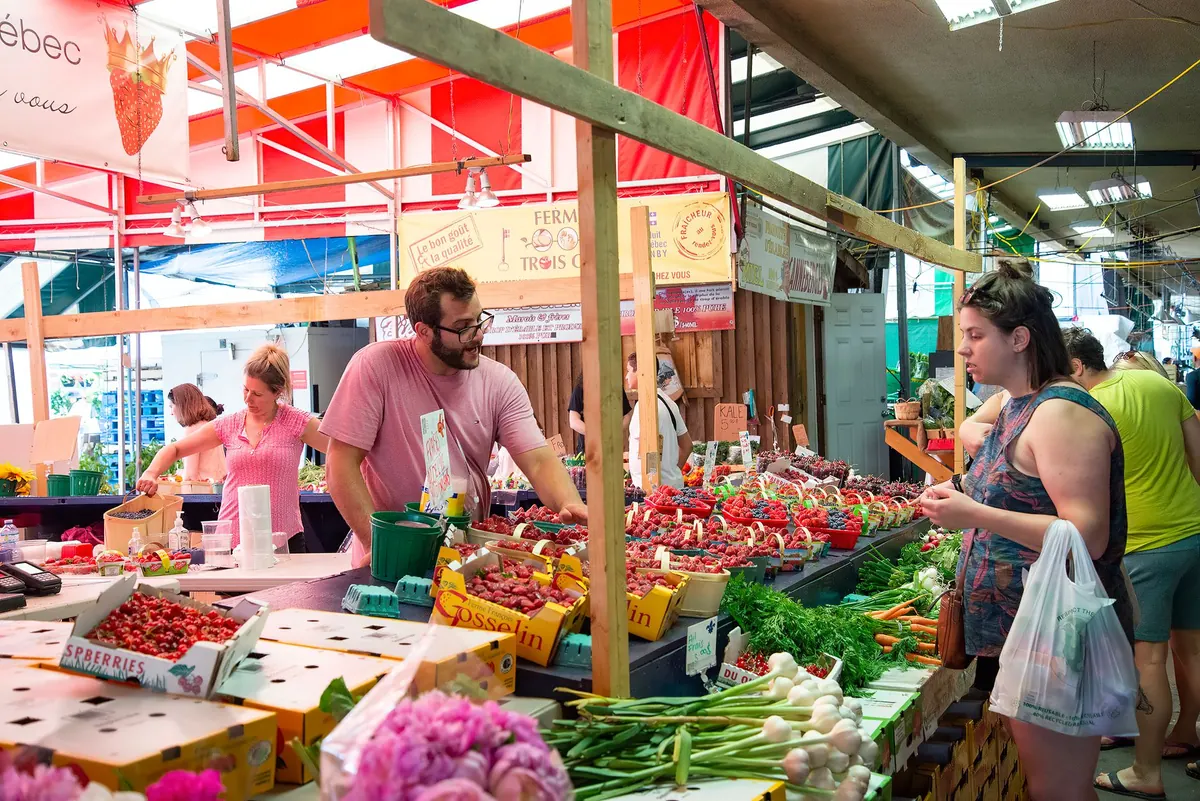
- Seasonal vegetables and fruit, often picked within the last day or two
- Beef, lamb, rare-breed pork, game in autumn and winter
- Fish at the coastal markets, landed locally
- Cheese, butter, yoghurt and sometimes milk
- Bread, pastries, cakes and traybakes
- Preserves, chutneys, honey, vinegar, oils
- Plants, herbs and cut flowers
- Hot food and coffee, which is where a lot of people start
What to Bring
Turn up empty-handed and you'll end up balancing a bag of potatoes under one arm while trying to pay with the other. A little preparation makes the whole trip calmer.
- Cash, including coins. Most traders now take cards, but mobile signal in a crowded square is unreliable and small change keeps queues moving.
- Two bags, one insulated. A cool bag for meat, fish, cheese and anything dairy is not a luxury on a warm morning.
- A trolley or rucksack if you're buying for the week. A single tote fills fast once there's a squash in it.
- A short list. Three or four things you actually need, not a full meal plan.
- A waterproof and a spare layer. Markets are outdoors, and Suffolk weather does what it likes.
- Your own cup, if you're planning on coffee. Some stalls will fill it.
How to Shop Well
The single biggest mistake first-timers make is buying from the first stall that catches the eye. Do a lap first.
- Walk the whole market before spending anything. You'll spot the better tomatoes, compare prices and work out what you actually want.
- Buy what looks good, not what's on the list. If the courgettes are ordinary and the beetroot is superb, the plan changes.
- Buy smaller amounts, more often. Fresh produce doesn't keep like supermarket produce, because it hasn't been bred or chilled for a fortnight on a shelf.
- Ask for a taste. Cheese, cured meat, apples, bread — most traders would rather you tried it than bought something you didn't like.
- Keep a rough budget in your head. It's easy to spend considerably more than you intended, and there's nothing wrong with that, as long as it's a decision rather than a surprise.
One practical note: if you're buying meat, fish or dairy, shop those stalls last so the cool bag isn't sitting in the sun for an hour. In summer, drive straight home rather than leaving a full boot in a car park while you do the rest of your errands.
Cook With the Season, Not Against It
The stock shifts through the year, and that's the point. In spring you'll see the first purple sprouting broccoli, rhubarb, wild garlic and, a little later, Suffolk asparagus — which is at its best for a short window and worth clearing the diary for. Early summer brings strawberries, peas, broad beans and young courgettes. Late summer and autumn are the generous months: apples, plums, squash, mushrooms, game, cobnuts. Winter thins out to roots, brassicas, kale, leeks, stored apples, and the things people make when there's nothing to pick — chutneys, cured meats, hard cheese, preserves.
If you don't recognise something, that's an opportunity rather than a problem. Most stalls will tell you how to cook it in two sentences and hand you a recipe card if you ask.
Talk to the People Selling
This is the part that turns a chore into something you look forward to. Ask where the farm is. Ask what's coming in next week. Ask for the cheaper cut and how to cook it — a slow braise, a tray roast, a stock. Ask whether the fish was landed that morning. Ask what to do with a vegetable you've never bought before.
You'll get straight answers, and you'll learn which stall's bread you prefer, whose sausages are properly seasoned, and who sells out by half past nine. Loyalty works both ways: regulars get the good stuff held back, and a heads-up when something special is coming.
The Practical Bits
Timing
Arrive early for the best choice, especially for bread, fish and anything seasonal and short. Arrive in the last half hour if you want to browse in peace and are happy with what's left — some traders would rather sell than pack it up, though don't count on discounts as a rule.
Parking and getting there
Town-centre markets mean town-centre parking. Check restrictions, pay properly, and allow longer than you think. A market is a fifteen-minute walk from where you eventually park, always.
Dogs, children and crowds
Leave the dog at home for this one. Food stalls and animals are not a good combination, and many markets restrict dogs near food areas anyway. Children, by contrast, do well here — the stalls are low, the samples are free, and nobody minds a curious question. Aisles get tight; go slowly and don't stop dead in the middle of one.
Allergies and food safety
Ask directly about ingredients if you have an allergy. Small producers often make food in shared kitchens, and you need a clear answer before you buy. If you have a medical condition that affects what you can eat, take advice from a qualified professional rather than a market stall — friendly as they are.
A Simple Plan for Your First Visit
Pick a market within half an hour of home, check the day and times before you set off, and go early. Take cash, a cool bag and one reusable bag. Do a full lap, buy a coffee, then spend properly on the second pass. Buy less than you think you need, ask one question at every stall you buy from, and cook what you bring home that evening rather than leaving it in the fridge until Thursday.
Then go back next month. The stock will be different, the traders will remember you, and you'll start shopping the way people around here did long before anyone thought to call it a farmers' market.
Photo: @coldbeer / Pexels